One bottle
1 LA$25.00
+ A$15.00 flat shipping per orderOne monthly dose for a standard lawn, or 50 watering cans for the garden.
Get Fulvic GoldA bed that has been fed for years is often not short of food. The food you already paid for is still in the soil, and the roots are not getting at it. Fulvic Gold is a soil conditioner from one volcanic peat deposit in the Wet Tropics of North Queensland. Extracted with water, nothing added. About 50 cents a watering can.
Get Fulvic Gold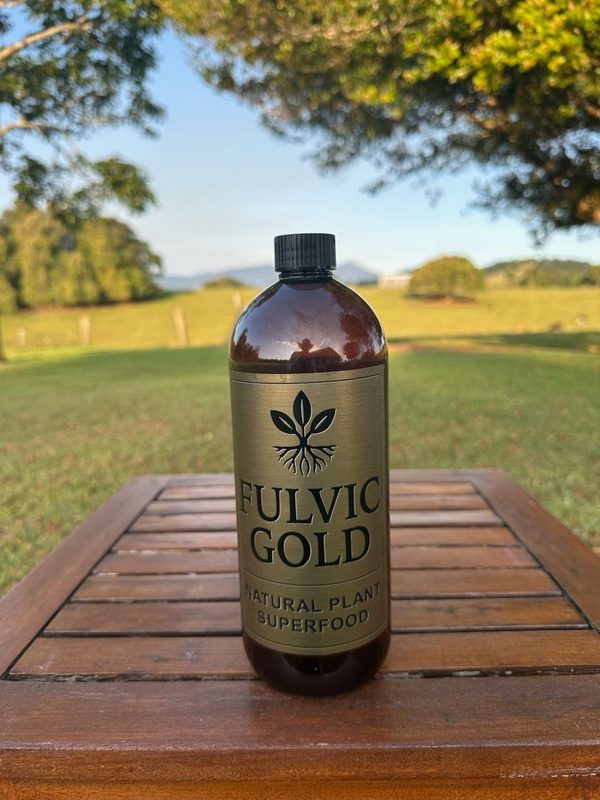
Typical analysis, indicative, varies by batch.
In plain words
You followed the packet. Rose food in spring and again in summer. Citrus food four times a year, because citrus are hungry. And each year there is a little less to show for it.
In a bed that has been fed for years the food is usually there. It is the step between the soil and the root that has slowed down.
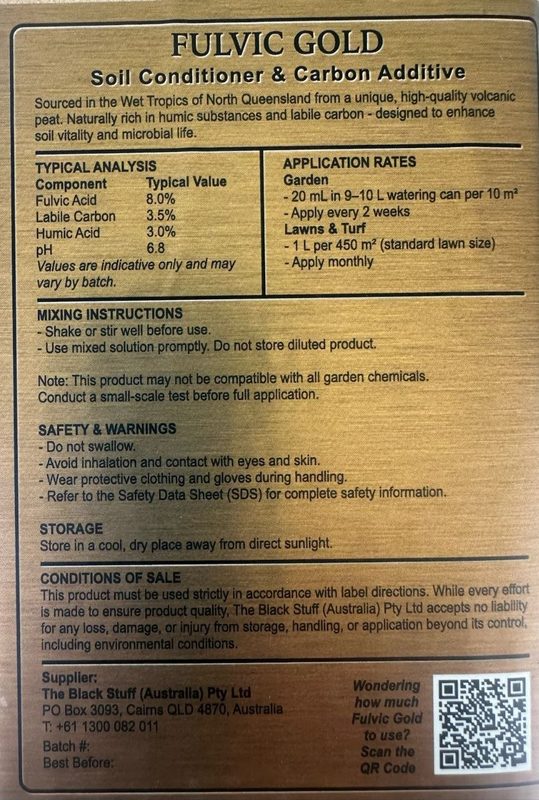
Fulvic Gold is for that step. Humic acid helps hold nutrients near the roots. Fulvic acid helps carry minerals to where the roots can use them. Labile carbon is food for the microbes in the soil, which do the breaking down. On the label: fulvic acid 8.0%, humic acid 3.0%, labile carbon 3.5%, pH 6.8. Typical analysis, indicative, varies by batch.
It is not a fertiliser. Keep your rose food and your citrus food.
Where it comes from: Lynch's Crater, a volcanic crater lake bed near Malanda on the Atherton Tablelands, where the peat formed over tens of thousands of years. It is the same peat that Queensland orchards spread on their citrus. We extract ours with water and add nothing. That tells you where it is from. It is not a promise about your garden.
How to use
20 mL in a 9–10 L watering can, per 10 m²
Apply every 2 weeks
1 L per 450 m² (standard lawn size)
Apply monthly
Straight talk
Soil changes are gradual. Nothing in this bottle works overnight and we will not tell you it does.
What people may notice first is in the soil, not the plant: soil that holds water a little longer, ground that is easier to get a trowel into, colour that holds between feeds. We will not promise you blooms or lemons. A lemon tree sheds the fruit it cannot carry every November and December, and no bottle changes that.
It is a soil input, not a fertiliser. Keep feeding as you do now, on different days.
We are running our own side-by-side trial on our own ground, one half treated and one half not, and we will publish the photos as they come, good or bad. Until then the analysis on the label is the only claim we make. Run your own: one rose with it, one without, same water, same feed.
Typical analysis
Typical analysis. Values are indicative only and may vary by batch.
The source
Fulvic Gold is drawn from Lynch's Crater, a volcanic crater lake bed near Malanda on the Atherton Tablelands in North Queensland. Plant material built up there under standing water over tens of thousands of years, and became peat.
We extract it with water and add nothing. It is the same peat Queensland orchards spread on their citrus; ours is the water extract, bottled. That tells you where it comes from. It is not a promise about your garden.
Questions
No. Keep feeding. Fulvic Gold is a soil conditioner, not a fertiliser, and it has no rose food or citrus food in it. Its job is to help the roots get at what you have already put in. Apply the two on different days and never in the same can. The label says it may not be compatible with all garden chemicals, so test a small area first.
No. Seasol is a seaweed extract. Fulvic Gold is a humic and fulvic extract from volcanic peat, with labile carbon for the microbes in the soil. Different source, different job, and plenty of gardeners use both. Do not mix them in the one can. Apply on different days.
Follow the label. Wear gloves when you handle the concentrate, keep it away from eyes and skin, and do not swallow it. Water it in and keep kids and pets off the area until it has dried. Store the bottle out of reach, like any garden product. The Safety Data Sheet is linked below.
The concentrate is dark. Mixed at 20 mL in a can it is the colour of weak tea. Keep the concentrate off porous pavers, sandstone and concrete, pour the can onto soil, and hose off any splash straight away. Test a small spot first if you are unsure. confirm with Peter: staining
Buy direct
Makes 50 watering cans, about A$0.50 each.
Prices in Australian dollars.
A$25.00
+ A$15.00 flat shipping per orderOne monthly dose for a standard lawn, or 50 watering cans for the garden.
Get Fulvic GoldA$75.00
Free shippingThree months for the lawn, a full season for the garden. Shipping included.
Get Fulvic GoldA$25.00 / month
+ A$15.00 flat shipping per orderLands before you need it. Price to be confirmed.
Get Fulvic Goldguarantee slot
Also at selected garden centres, nurseries and turf suppliers. Trade and wholesale: 1300 082 011.